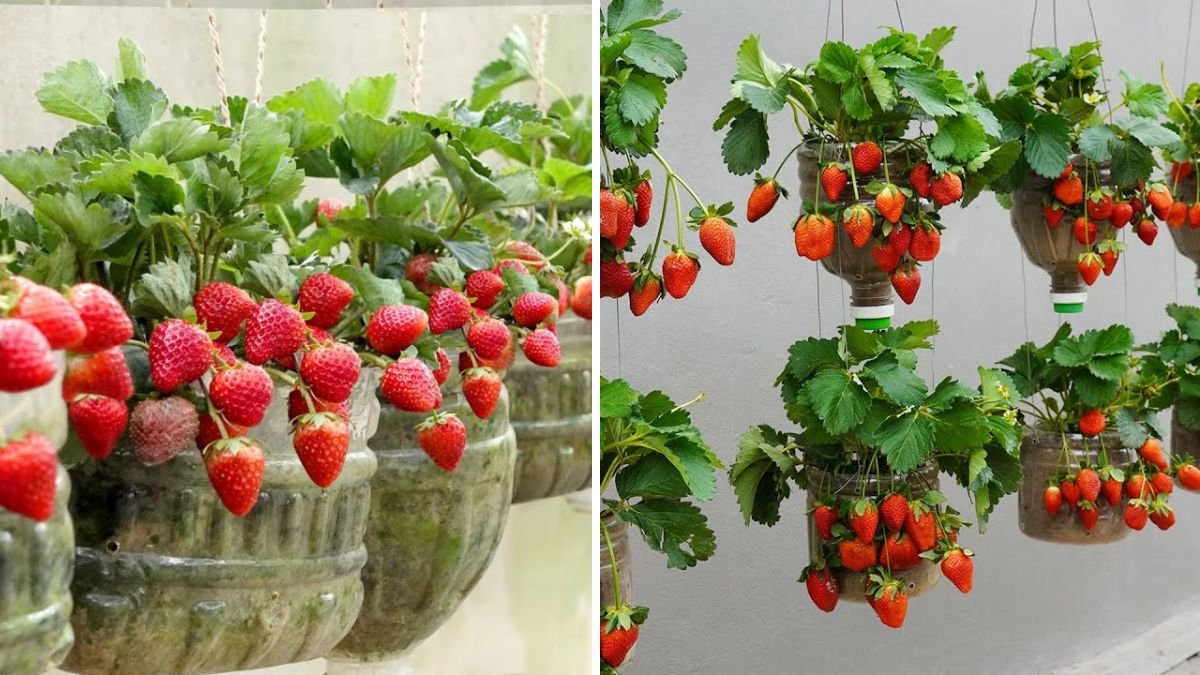

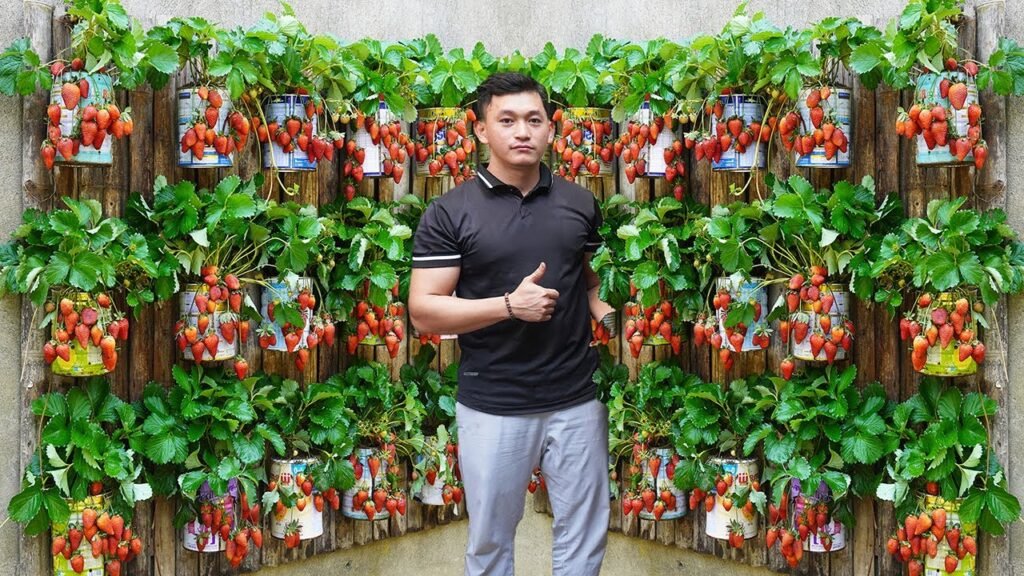
What if you could turn an old, unused wall into a living, fruit-bearing masterpiece? Imagine walking outside and plucking fresh, sweet strawberries growing vertically right in front of you. No land, no expensive planters, no large garden beds—just a simple collection of plastic bottles and a wall you thought was useless.
This creative technique is not just budget-friendly; it’s also beautiful, productive, and perfect for small spaces. Whether you live in an apartment, have a tiny backyard, or simply want a new way to grow fresh fruit, this method can transform any blank wall into a thriving strawberry garden.
In this comprehensive guide, you’ll learn step-by-step how to create a vertical strawberry garden using recycled plastic bottles, how to maintain it year-round, and how to harvest sweet berries without needing a traditional garden.
Why Grow Strawberries on Walls?
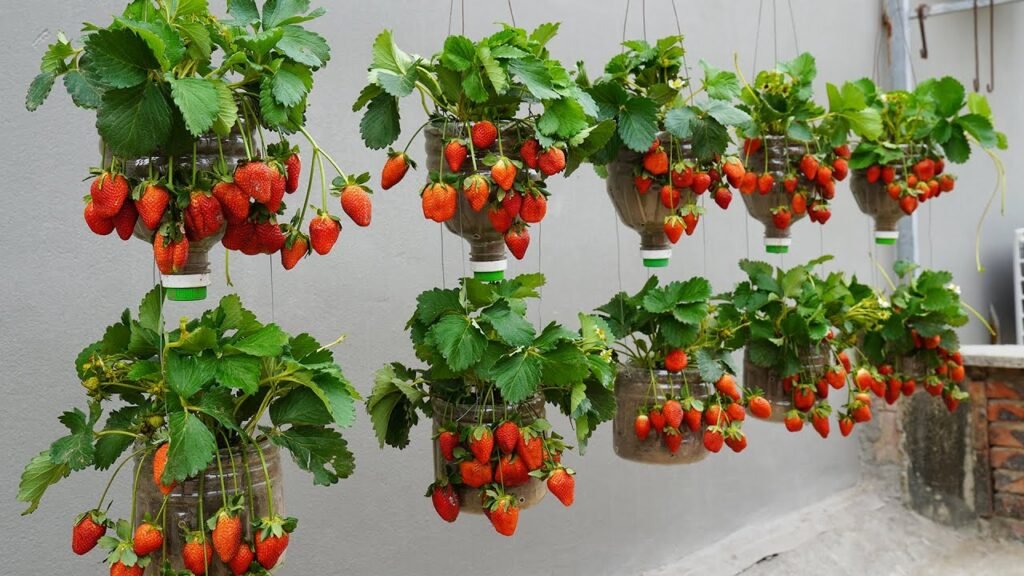
Strawberries are one of the easiest fruits to grow vertically. Their shallow roots and compact growth make them perfect for containers of all shapes and sizes—including cut plastic bottles.
Here’s why this method works so well:
✔ Saves Space:
Even a narrow wall can hold dozens of plants.
✔ Reuses Plastic Bottles:
Eco-friendly and cost-efficient.
✔ Pest Control:
Strawberries stay off the ground, reducing slug and insect damage.
✔ Excellent Drainage:
Vertical systems prevent waterlogging, one of the main causes of strawberry diseases.
✔ Great Sun Exposure:
Plants receive uniform light when grown vertically.
✔ Beautiful Aesthetic:
A wall full of strawberry plants looks like a green curtain decorated with red gems.
Step 1: Choose the Right Containers
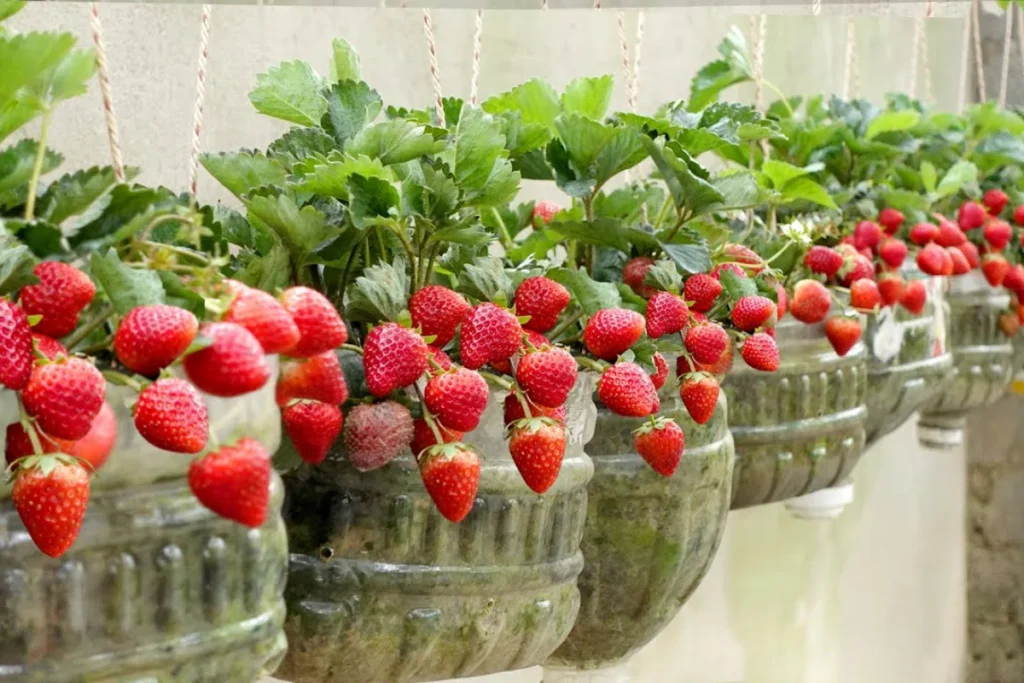
Plastic bottles are perfect because they are:
- Lightweight
- Easy to cut
- Free or cheaply available
- Perfect for hanging
Which Bottles Work Best?
- 1–2 liter bottles are ideal
- Clear, white, or light-colored bottles prevent overheating
- Avoid black bottles—they absorb too much heat and damage roots
Cut horizontally or vertically depending on the design you want:
Two Popular Styles
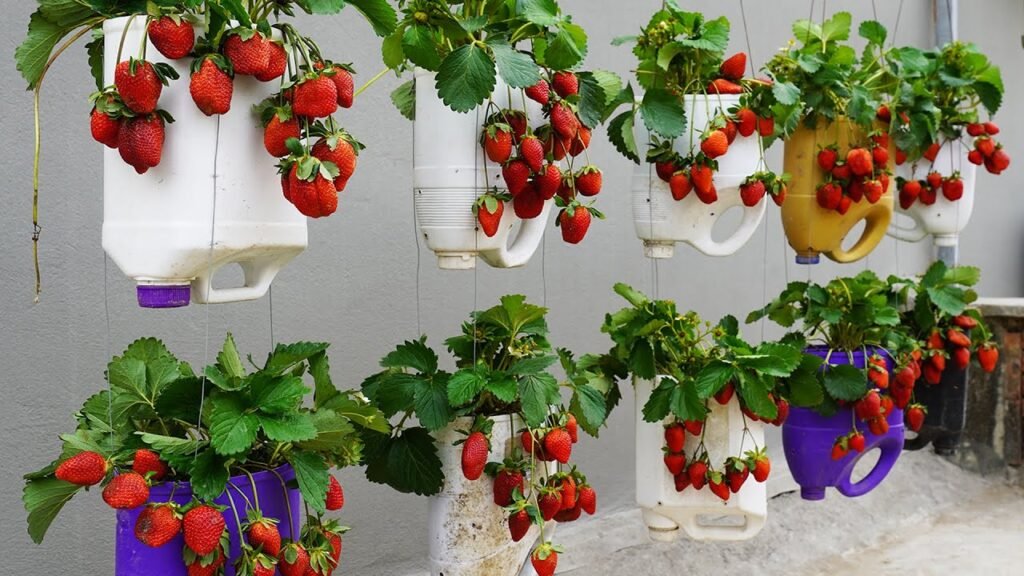
- Horizontal Bottle Planters – Cut along the side, grow 1–2 plants per bottle
- Vertical Hanging Bottles – Cut front window, plant 1 strawberry per bottle
Both methods work beautifully on walls.
Step 2: Prepare the Bottles
Follow these simple steps:
- Wash bottles thoroughly
- Cut openings for planting
- Add 3–5 drainage holes at the bottom
- Add 2–4 holes on the upper sides for tying rope or wire
- Smooth any sharp edges
Pro Tip:
Use a heated nail or metal skewer to puncture holes easily and safely.
Step 3: Attach Bottles to the Wall
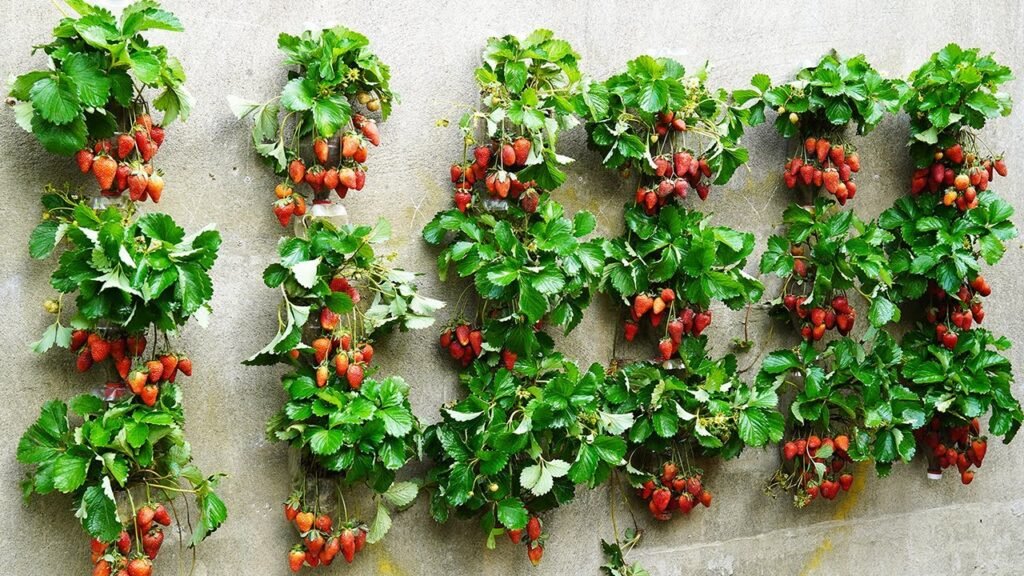
You can mount the bottles in several ways:
✔ Rope System
Tie bottles in rows and hang them vertically.
✔ Wall Hooks
Fix small hooks into the wall and hang bottles individually.
✔ Mesh or Net Support
Tie bottles onto a plastic mesh or metal grill attached to the wall.
✔ Wooden Frame
Create a simple frame and mount bottles on it for a clean, organized look.
Spacing between bottles should be around 10–12 inches, allowing leaves and runners to grow comfortably.
Step 4: Prepare the Perfect Soil Mix
Strawberries need fluffy, fertile, and well-draining soil.
Ideal Soil Mix
- 40% coco peat
- 40% compost or vermicompost
- 20% garden soil or sand
- A handful of neem cake to prevent pests
- Add 1 tbsp bone meal per bottle for stronger roots
This mix ensures hydration without waterlogging.
Step 5: Choose the Right Strawberry Variety
Some strawberry types grow better in containers and vertical systems.
Best Compact Varieties
- Sweet Charlie
- Chandler
- Alpine strawberries
- Day-neutral varieties
- Everbearing strawberries
Choose varieties labeled as container-friendly or everbearing for continuous harvest.
Step 6: Planting the Strawberries
Fill each bottle three-quarters full with the soil mix.
How to Plant Correctly
- Place the strawberry crown just above the soil line
- Do NOT bury the crown—this causes rot
- Water lightly to settle soil
- Keep bottles in partial shade for the first 3 days
After plants adjust, gradually expose them to full sunlight.
Step 7: Sunlight Requirements
Strawberries love sunlight.
- 6–8 hours of direct sunlight is ideal
- East- or south-facing walls are best
- If the wall gets too hot, add shade during afternoon hours
Proper sunlight gives large, sweet, and richly colored strawberries.
Step 8: Watering a Vertical Wall Garden
Watering is the most important part of vertical gardening.
Watering Tips
- Water from the top layer and let it trickle down
- Plastic bottles prevent soil from drying too quickly
- In summer: water daily
- In winter: water every 2–3 days
- Do not flood bottles—wet roots cause fungal diseases
A simple drip system or small pipe makes watering extremely easy.
Step 9: Feeding Your Wall of Strawberries
Strawberries are heavy feeders because they fruit frequently.
Fertilizer Schedule
- Every 15 days: Add a handful of compost
- Every 10 days: Use liquid fertilizers (seaweed, compost tea)
- Every 20 days: Add potash booster (banana peel fertilizer or ash)
This keeps plants productive all season.
Step 10: Managing Runners
Strawberries produce runners—long stems that create new baby plants.
What to Do With Runners
- Trim them for bigger fruit
- Or plant them in other bottles to expand your vertical wall
This way, your strawberry wall can multiply naturally over time.
Step 11: Pest and Disease Management
Strawberries grown vertically face fewer issues, but here’s what to watch for:
Common Problems
- Aphids
- Mealybugs
- Fungal spots
- Root rot from overwatering
Easy Natural Solutions
- Spray neem oil weekly
- Improve airflow between bottles
- Remove yellow leaves regularly
- Avoid wetting leaves while watering
Vertical gardening keeps most pests away since plants stay off the ground.
Step 12: Harvesting Your Strawberries
The best part—picking fresh strawberries from your wall!
When to Harvest
- When berries turn deep red
- When they feel soft but not mushy
- Usually 30–45 days after flowering
Pro Tip:
Pick in the morning when fruits are cool and sweet.
Regular picking encourages more fruit.
Benefits of a Bottle Strawberry Wall
- Turns empty walls into green art
- Saves huge amounts of space
- Produces organic fruit right at home
- Child- and pet-friendly
- Eco-friendly recycling project
- Beautiful décor for balconies, terraces, and courtyards
With a little care, your wall can produce strawberries for years.
Final Thoughts: A Garden Where You Least Expect It
Growing strawberries on old walls using plastic bottles is more than a gardening hack—it’s a creative way to blend nature with everyday spaces. This system is inexpensive, beautiful, and highly rewarding. Even beginners can create a stunning vertical strawberry farm that produces sweet, juicy fruit season after season.
Every wall has potential. Every bottle can become a planter. And every gardener, no matter how little space they have, can grow their own delicious strawberries.