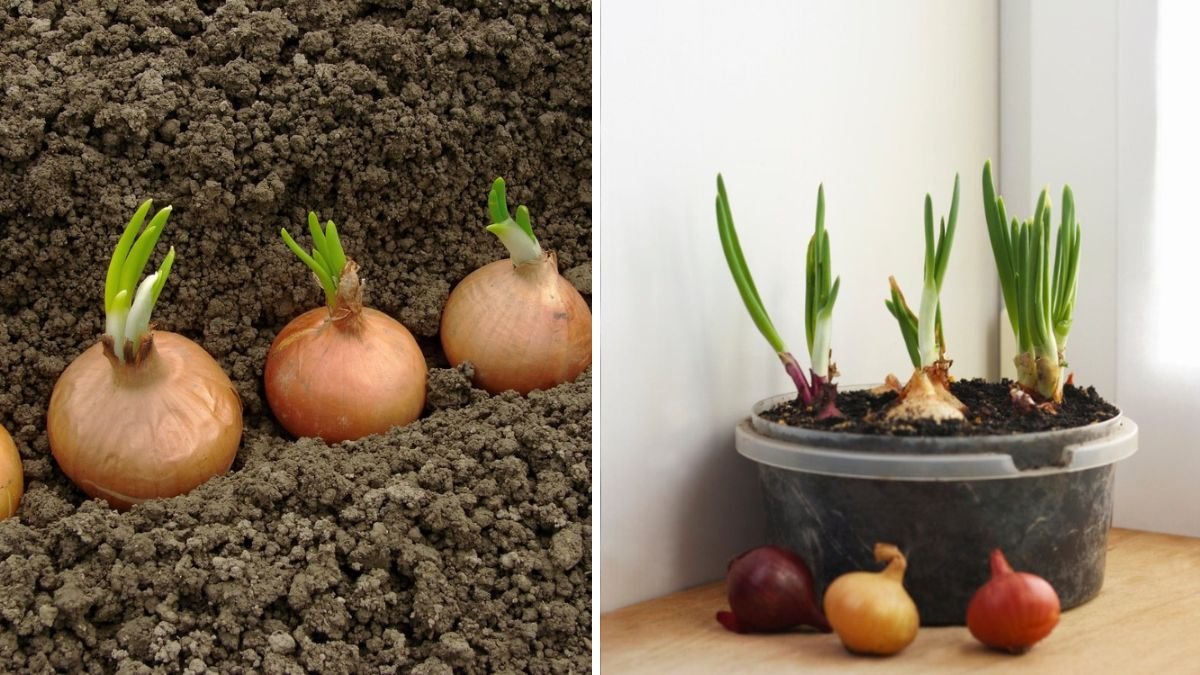

Growing onions at home is one of the most satisfying gardening experiences—simple, low-maintenance, and incredibly rewarding. Whether you have a backyard garden, a terrace, or just a few pots on a balcony, onions adapt well to almost any space. With just a little care, you can enjoy continuous harvests of fresh, flavorful bulbs and greens throughout the year.
In this comprehensive guide, you’ll learn everything you need to know: choosing varieties, preparing soil, planting, watering, maintenance, common mistakes, and harvesting. By the end, you’ll be ready to grow onions like a pro—even if you’re a complete beginner.
Why Growing Onions at Home Is So Easy
Onions are perfect for home gardeners because they require very little attention once planted. They tolerate heat, survive mild neglect, and grow well even in containers. A few reasons they are ideal for beginners:
- They don’t require rich or complicated soil.
- They are hardy and resistant to many pests.
- They grow in multiple seasons, especially in warm climates.
- They need minimal space—you can grow dozens in a single pot.
Best of all, onions can be grown both from seeds and from bulbs (sets), giving you full flexibility depending on how fast you want results.
Choosing the Right Onion Type for Home Growing
Before planting, decide what type of onion suits your needs. There are three main ways to grow onions:
1. Onion Sets (Small Bulbs) – Fastest Results
These are young onions that have already begun forming small bulbs. They mature quickly and are perfect for beginners.
Advantages:
- Easiest method
- Faster harvest (8–10 weeks)
- Higher success rate
2. Onion Seeds – For Larger Long-Term Harvests
Seeds take more time but often produce bigger bulbs.
Advantages:
- Cheaper
- Great for mass planting
- Good for specific varieties
3. Sprouted Kitchen Onions – Zero Cost
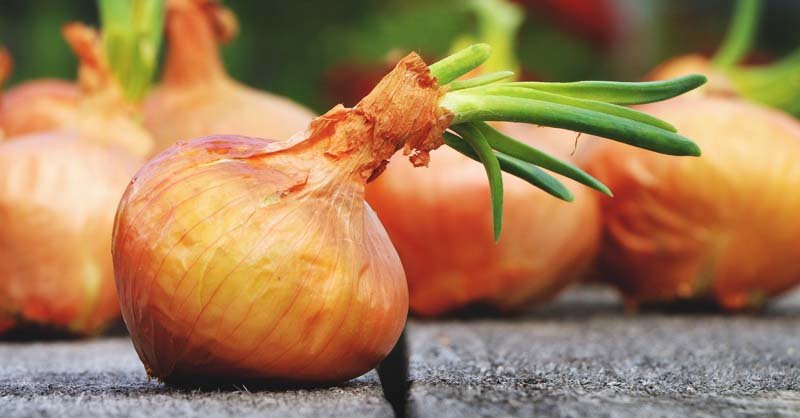
If your onions at home sprout green shoots, don’t throw them away—plant them!
Advantages:
- 100% free
- Extremely easy
- Produces both greens and bulbs
Ideal Growing Conditions for Onions
1. Sunlight
Onions need at least 5–6 hours of direct sunlight daily. More sun = larger bulbs.
If you grow indoors, place them near a bright south-facing window or use grow lights.
2. Soil Requirements
Onions prefer:
- Light, loose soil
- Good drainage
- Slightly acidic to neutral pH
Avoid compact or clay-heavy soil; it leads to small bulbs.
A perfect soil mix for pots:
- 40% garden soil
- 40% compost
- 20% sand or cocopeat
3. Containers
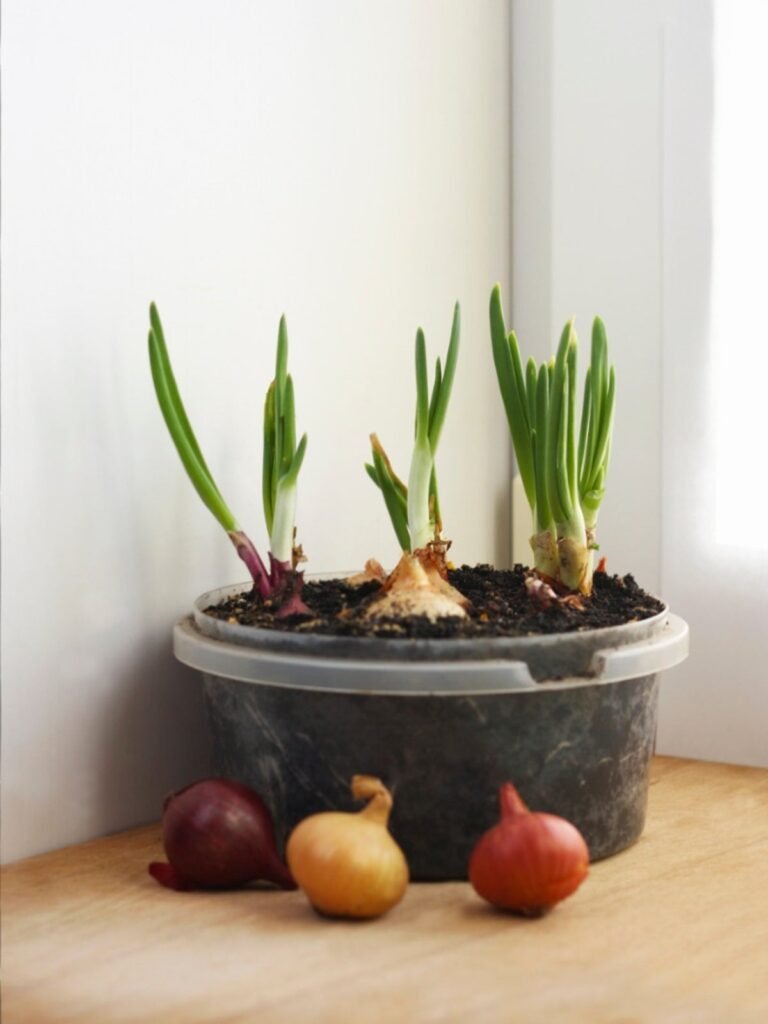
Onions grow surprisingly well in pots. Choose:
- Depth: 8–10 inches
- Width: As large as possible
- Good drainage holes
Spacing in pots:
- 3–4 cm between each onion set or seedling
How to Plant Onions at Home
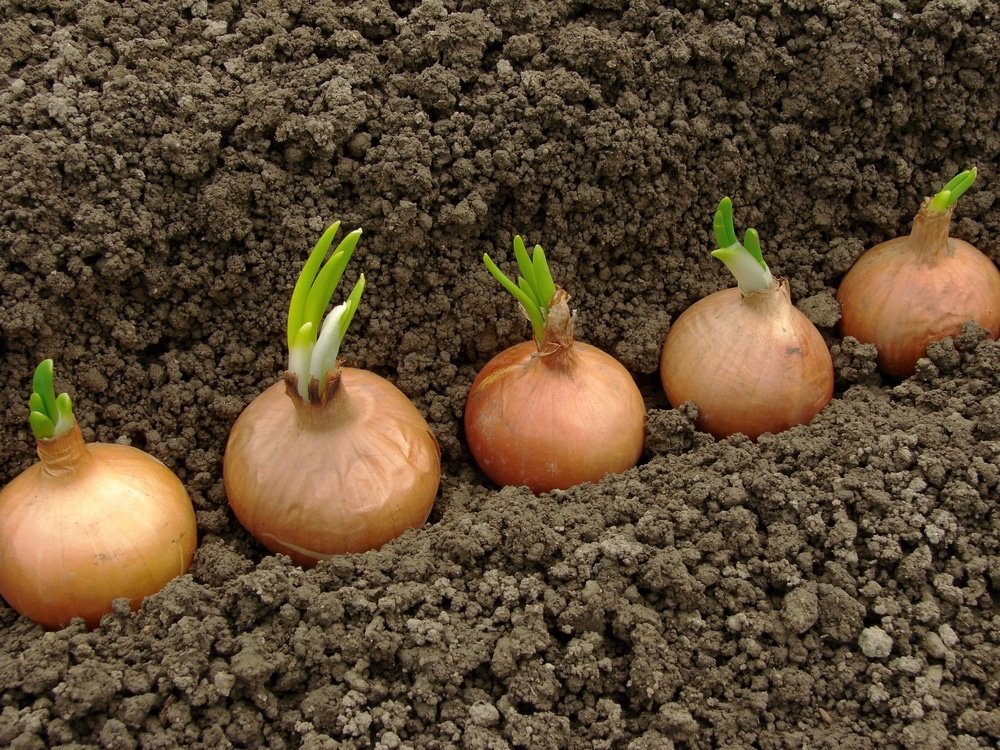
Planting Onion Sets
- Loosen the soil and dig small holes about 2–3 cm deep.
- Place each small bulb with the pointed side facing upward.
- Cover lightly with soil (do not bury too deep).
- Water gently.
Planting Onion Seeds
- Make shallow rows, 1 cm deep.
- Sprinkle seeds evenly.
- Cover lightly with soil.
- Water with a spray bottle to avoid disturbing seeds.
Planting Sprouted Kitchen Onions
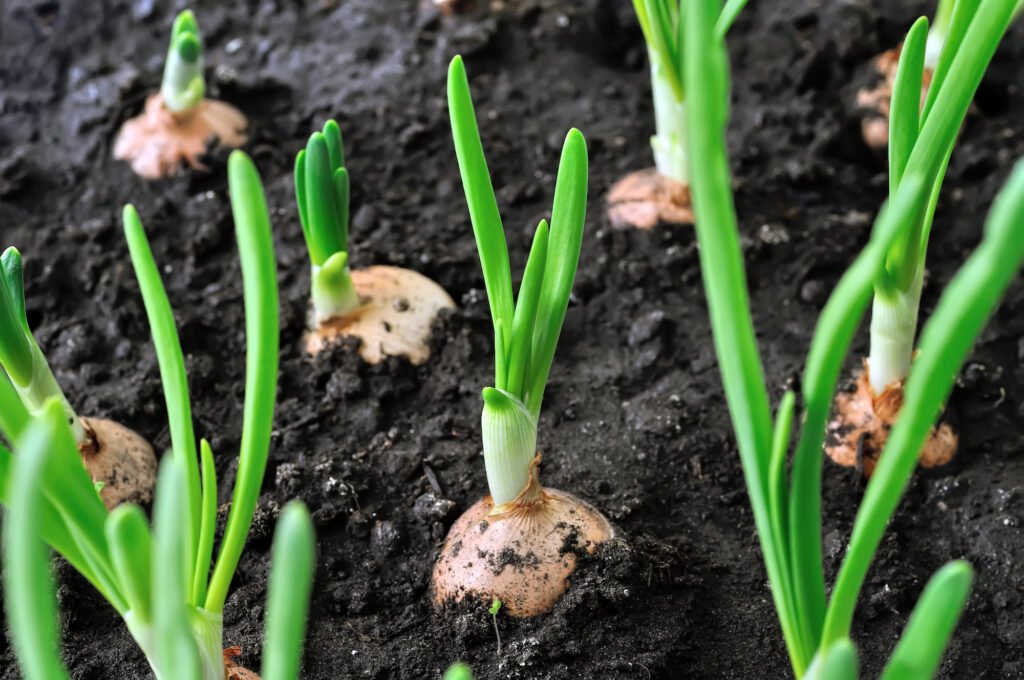
- Peel off the outer dry layers.
- Cut the onion into halves or quarters (each with a green shoot).
- Plant pieces 3–4 cm deep.
- Water well.
This method can produce multiple bulbs from a single onion!
Watering: The Secret to Big, Juicy Bulbs
Onions need consistent moisture, but they don’t like waterlogged soil.
- Water 2–3 times a week in hot weather.
- Water once a week in cool weather.
- Ensure the soil remains slightly moist but never soggy.
Tip: Reduce watering slightly when the bulbs start swelling—this helps them become firm and store for longer.
Fertilizing Your Onion Plants
Onions are heavy feeders. To get big bulbs, provide nutrients at key stages.
Before Planting
Mix compost or manure into the soil.
During Growth
Feed your plants every 15 days with:
- Liquid compost tea
- Cow dung water
- A mild NPK fertilizer
- Kitchen waste fertilizers (onion peel tea, banana peel water)
Bulb Formation Stage
Switch to high-potassium fertilizers like:
- Wood ash
- Banana peel powder
Potassium helps bulbs grow bigger and healthier.
How to Care for Your Onion Plants
1. Weeding
Remove weeds regularly because they compete for nutrients and stunt bulb development.
2. Mulching
Add dry leaves or straw around the plants to:
- Retain moisture
- Reduce weeds
- Maintain soil temperature
3. Thinning Crowded Plants
If seedlings grow too close, thin them out. Crowding leads to small bulbs.
4. Pest Control
Onions are naturally pest-resistant. But if you ever see issues:
- Spray neem oil once every 15 days.
- Avoid harsh chemicals—they aren’t necessary.
Common Mistakes to Avoid
1. Planting too deep
This restricts growth. Onions need to be shallow.
2. Overwatering
Causes rot and fungus. Always check soil before watering.
3. Heavy clay soil
Bulbs won’t expand and will remain small.
4. Planting in shade
Onions require full sun for proper bulb formation.
5. Harvesting too early
Wait until the top leaves turn yellow and start falling.
When and How to Harvest Onions
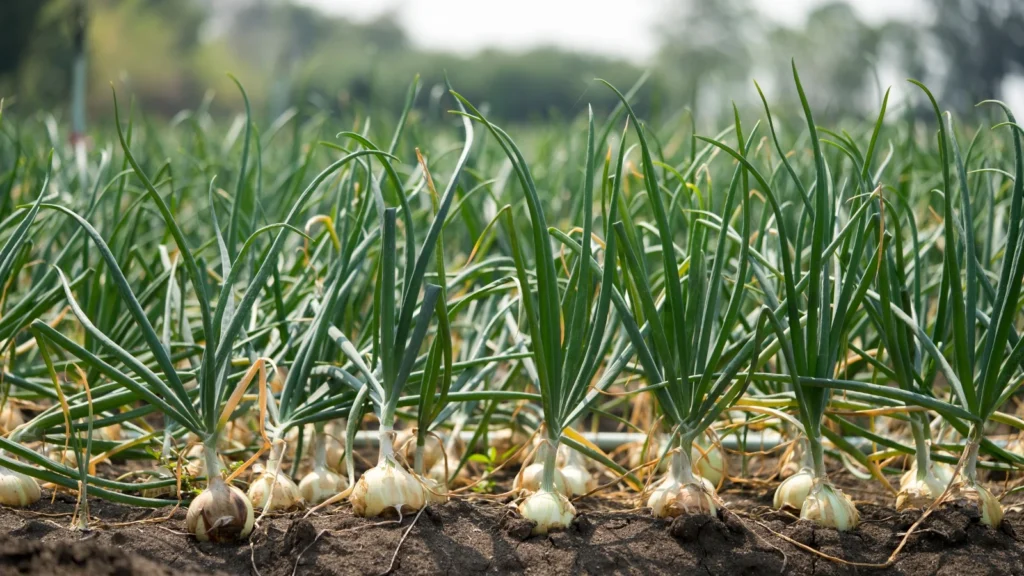
Onions are ready when:
- Leaves turn yellow
- Tops bend over naturally
- Bulbs look large and firm
Steps to Harvest
- Stop watering 7–10 days before harvest.
- Loosen soil gently with your hands.
- Pull bulbs out carefully.
- Let them dry in a shady area for 5–7 days.
- Cut leaves and roots once fully dry.
This “curing” step increases shelf life dramatically.
If you want spring onions, harvest much earlier when greens are tall and bulbs are small.
How to Store Your Homegrown Onions
Once fully cured:
- Store in mesh bags
- Keep in a dry ventilated place
- Avoid closed plastic bags (causes moisture buildup)
With proper storage, onions last 3–6 months.
Growing Onions in Water (Hydroponic Style)
If you want green onions (spring onions), you can grow them in water:
- Take the onion bulbs or roots.
- Place them in a glass with the root side down.
- Fill with water just enough to touch the roots.
- Keep near sunlight.
- Change water every 2–3 days.
Shoots will grow fast—perfect for kitchens.
Continuous Onion Harvest—All Year Long
To enjoy a steady supply:
- Plant a few onions every 2–3 weeks.
- Mix methods—seeds, sets, and sprouted onions.
- Save seeds from your best plants.
With staggered planting, you’ll never need to buy onions again.
Final Thoughts: Anyone Can Grow Onions at Home
Growing onions at home is truly easy for everyone—even if you’ve never planted anything before. Whether you want leafy green onions or big fat bulbs, a pot on your balcony or a small garden bed is enough to get started.
With sunlight, well-draining soil, proper watering, and a bit of patience, you will soon be harvesting homegrown onions bursting with freshness and flavor.
Start today—your kitchen will thank you!