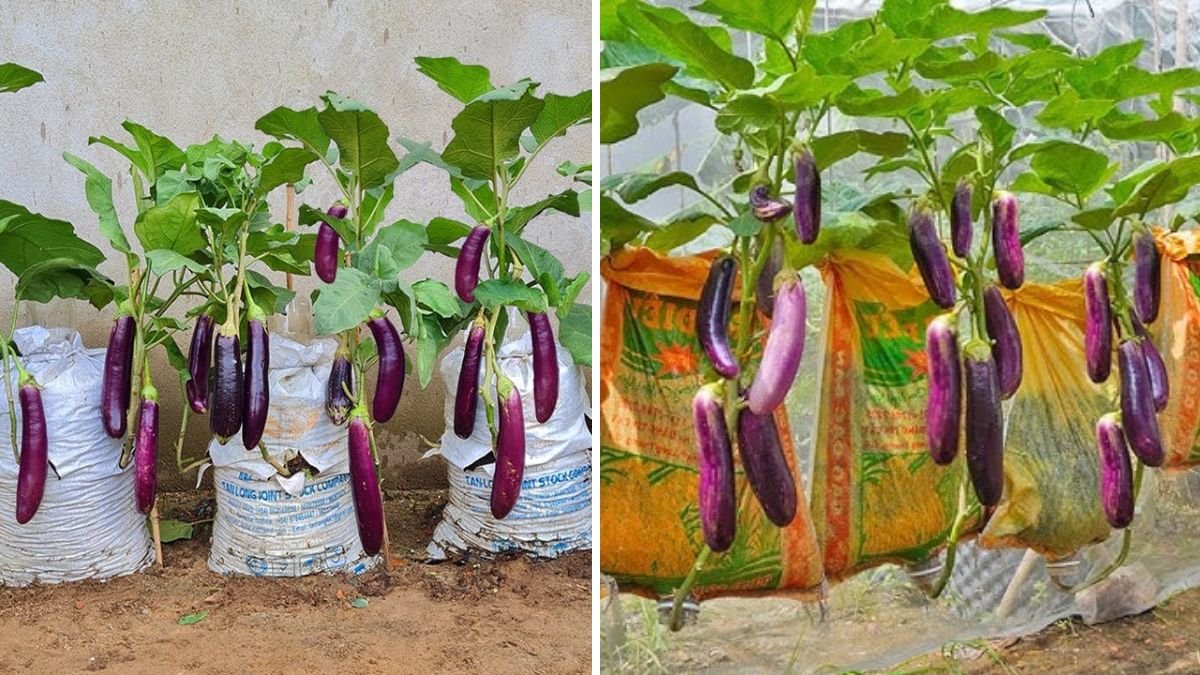

Eggplants, or brinjals as many call them, are among the most rewarding vegetables you can grow at home. They are beautiful, productive, and adaptable to containers, balconies, rooftops, or backyard gardens. But what if you could grow eggplants so effectively that each plant produces more fruit than you ever thought possible?
Yes—there is a method. In fact, several simple but powerful techniques can turn ordinary eggplant plants into heavy-yielding, fruit-loaded super producers. Whether you’re a beginner or an experienced gardener, the steps outlined below will transform the way you grow eggplants forever.
Let’s dive into the strategy that guarantees abundant harvests!
🌱 Why Eggplants Often Underperform (And How to Fix It)
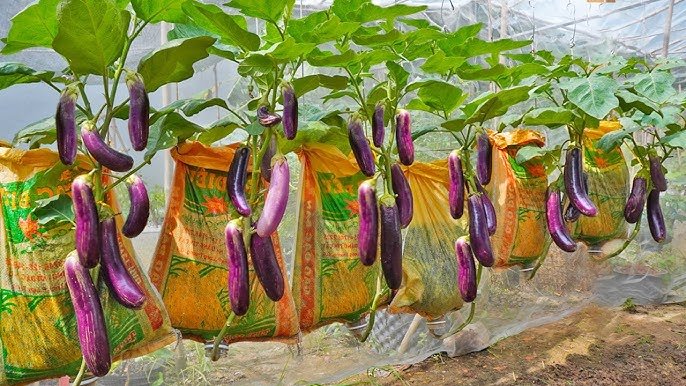
Many gardeners struggle to get big, healthy eggplants. Some plants stay small, some produce only 3–4 fruits, and others drop flowers before fruiting. Most of these problems come from:
- Poor soil nutrition
- Insufficient sunlight
- Improper watering
- Lack of pruning
- No support or spacing
- Weak root development
The good news? These issues are easy to solve with the right growing method. When eggplants receive ideal conditions and smart care, they respond dramatically—with dozens of shiny, heavy fruits.
🌿 Step 1: Choose the Right Variety for Big Harvests
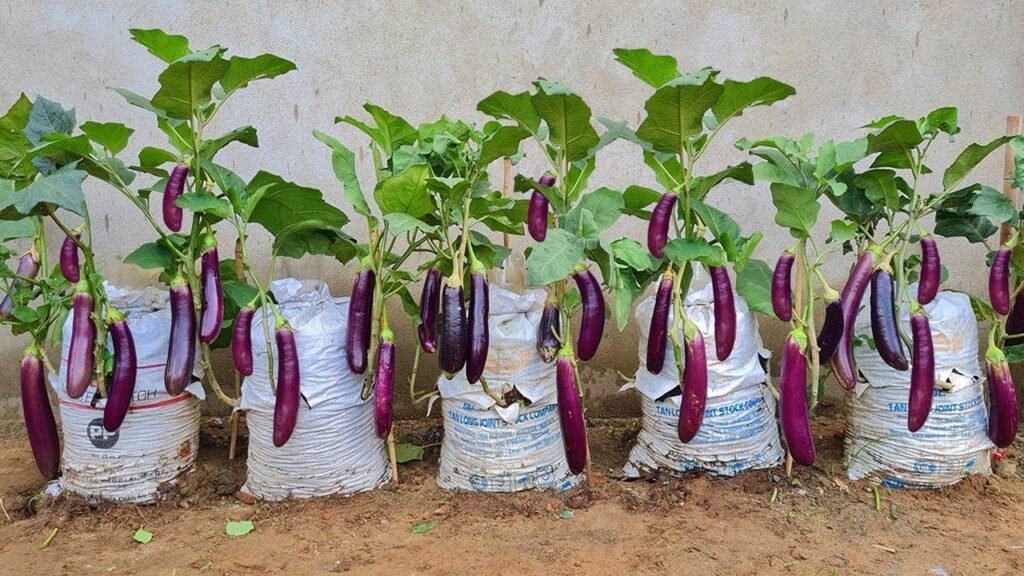
Start with varieties known for productivity:
- Black Beauty
- Long Purple
- Thai Green
- Japanese Long
- White Brinjal
- Round Brinjal (Indian variety)
These varieties grow fast, flower early, and bear continuously for months.
🪴 Step 2: Prepare the Perfect Soil Mix
Eggplants thrive in light, rich, well-draining soil. A poor soil mix leads to weak plants and low fruiting.
Use this high-yield soil recipe:
- 40% garden soil
- 40% compost or cow dung
- 20% coco peat or sand
Mix thoroughly.
Add boosters for maximum fruiting:
- A handful of wood ash (potassium for flowering)
- A handful of bone meal (phosphorus for strong roots)
- 1 teaspoon neem powder (to prevent soil pests)
This mix ensures that plants develop a powerful root system and absorb nutrients efficiently, directly increasing fruit production.
☀️ Step 3: Choose the Right Growing Location
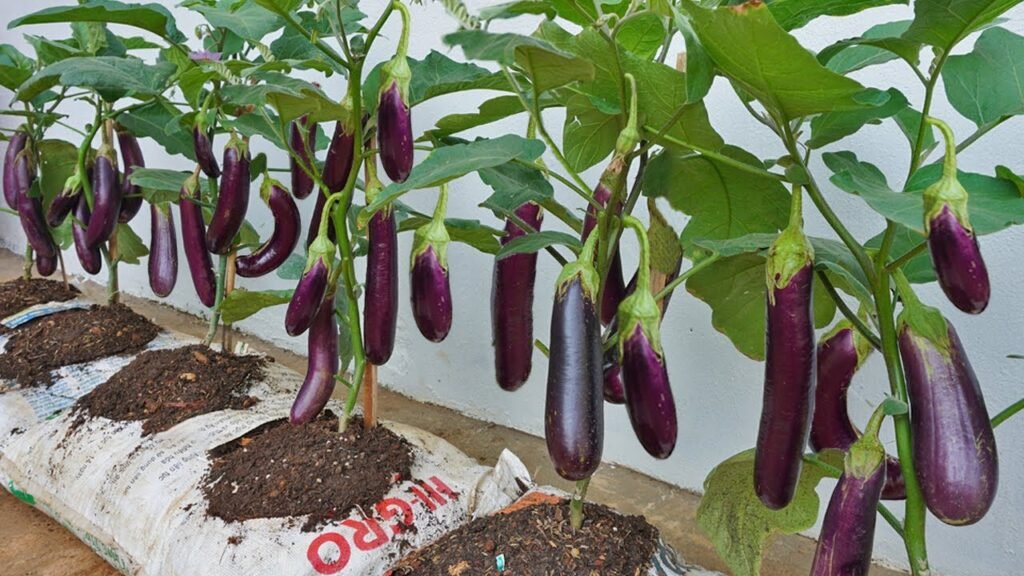
Eggplants love sunlight—and lots of it.
Ideal conditions:
- 6–8 hours of direct sun daily
- Warm temperatures
- Open-air circulation
Eggplants grown in shade or partial sun produce fewer flowers and fruits. If you’re growing on a balcony or terrace, choose the brightest spot.
🥤 Step 4: Start With Strong Seedlings
You can grow seedlings in cups, small pots, or seedling trays.
Germination tips:
- Sow seeds 1 cm deep
- Keep the soil moist but not soggy
- Cover with plastic for faster germination
- Seeds sprout within 5–10 days
Transplant seedlings only when:
- They are 12–15 cm tall
- They have 5–6 true leaves
- Stems are thick and sturdy
Strong seedlings = strong adult plants = big fruiting.
🪴 Step 5: Use the Right Pot Size
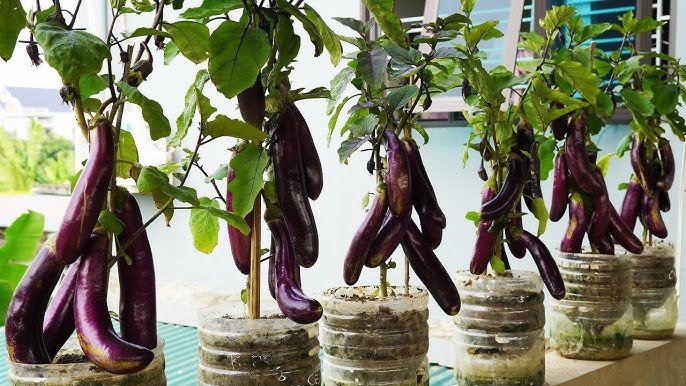
Eggplants need space. Roots must spread deep to produce many fruits.
Best container size:
- Minimum 12–15 inches wide
- 12–18 inches deep
If using grow bags, choose 20–25 liter size.
Crowded roots = poor growth and low yields.
💧 Step 6: Water Correctly—The Secret to Flowering
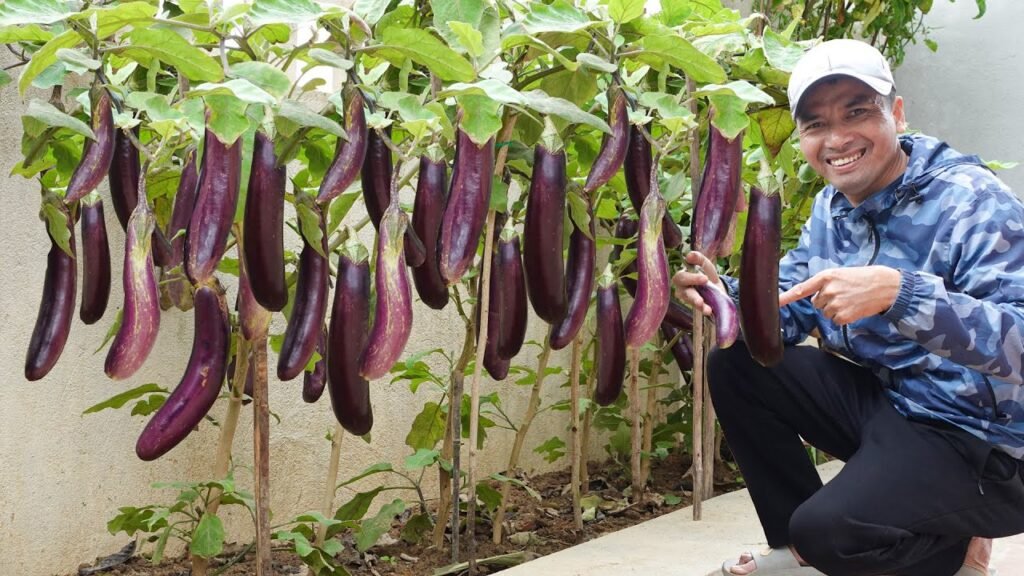
Eggplants love moisture but hate waterlogging.
Watering rules:
- Water deeply every 2–3 days
- Never let soil dry completely
- Keep water away from leaves to prevent fungus
Deep watering encourages deep roots and strong stems—both essential for big fruits.
🌸 Step 7: Prune Smartly for Maximum Fruiting
This is the step most gardeners skip, and the reason their yields remain low.
How to prune for more fruits:
- Remove the first few flowers so the plant focuses on leaf and root growth.
- When the plant reaches 30–40 cm, remove extra side shoots at the bottom.
- Keep only 3–4 strong branches.
- Trim weak or crowded branches regularly.
Pruning helps the plant distribute its energy toward big, healthy fruits rather than unnecessary foliage.
🧵 Step 8: Support Your Eggplant Plants
Eggplant branches bend under the weight of fruit. Without support, stems break and flowering reduces.
Use supports like:
- Bamboo sticks
- Tomato cages
- String trellis
- Wooden stakes
Tie branches loosely with soft cloth. Supported plants produce more and stay healthy longer.
🌼 Step 9: Feed Your Plants for Heavy Fruiting
Fertilizing is crucial.
During early growth (first 3–4 weeks):
- Compost tea
- Diluted cow dung liquid
- Seaweed extract
During flowering and fruiting:
- Banana peel fertilizer (potassium)
- Wood ash
- Epsom salt once a month (magnesium)
- Bone meal (phosphorus)
Feed every 15 days.
Potassium and phosphorus = more flowers + more fruit.
🐞 Step 10: Protect From Common Pests
Eggplants are often attacked by aphids, mealy bugs, and beetles.
Protect naturally using:
- Neem oil spray every 10 days
- Soap water spray
- Garlic-chili spray
A pest-free plant always produces more fruit.
🍆 Harvesting: The Exciting Part!
Eggplants grow fast once fruiting begins.
Harvest when:
- The skin is shiny
- Fruit is tender
- Size matches the variety
- The fruit springs back when pressed
If the skin becomes dull, the fruit is overripe and seeds become hard.
Harvesting regularly encourages more flowers and fruits—another secret to continuous production.
🌿 Bonus Tips for Even Bigger Eggplant Harvests
1. Pinch the growing tip once the plant reaches 2 feet.
This encourages side branches and doubles flowering.
2. Add mulch (dry leaves, straw) on the soil surface.
Keeps moisture, reduces weeds, and boosts fruiting.
3. Shake the plant gently during flowering.
Helps pollination, especially indoors.
4. Rotate pots every few days.
Ensures even sunlight exposure.
5. Remove damaged fruits early.
The plant will redirect energy to new, healthy fruit.
🌟 Final Thoughts: Anyone Can Grow Eggplants Like a Pro!
Eggplants are generous plants—they grow easily, adapt well to containers, and produce abundantly when given the right care. The method shared above is simple yet incredibly effective. With rich soil, proper sunlight, smart pruning, and regular feeding, your eggplants will surprise you with more fruits than you ever imagined.
Whether you’re growing on a balcony, terrace, or small backyard, this technique will help you enjoy basket after basket of fresh, shiny, delicious eggplants—all grown by your own hands.
Start today, follow these steps, and soon your eggplant plants will be so heavy with fruit that you’ll proudly say:
“I’ve never seen eggplants grow this well!”