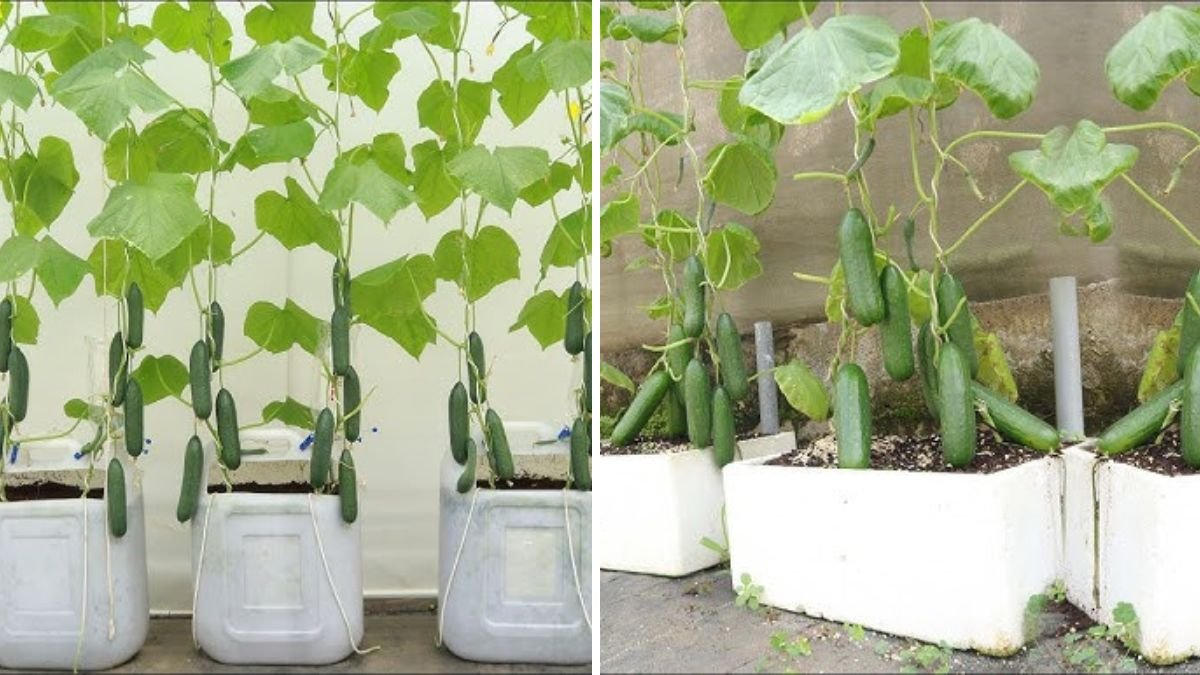

Have you ever wished you could enjoy fresh, crunchy cucumbers without needing a large garden or fancy equipment? Good news: you can! With just a few plastic cans, some soil, and a sunny balcony or terrace, you can grow cucumbers right at home—no garden needed. This simple, space-saving technique is perfect for urban dwellers, apartment owners, and anyone with limited space but a desire for fresh, homegrown vegetables.
In this guide, we’ll show you how to turn ordinary plastic cans into productive cucumber planters, step by step. By the end, your balcony or terrace could be producing fresh, juicy cucumbers throughout the season.
Why Grow Cucumbers in Plastic Cans?
Plastic cans are an inexpensive and practical solution for urban gardening. They offer several advantages:
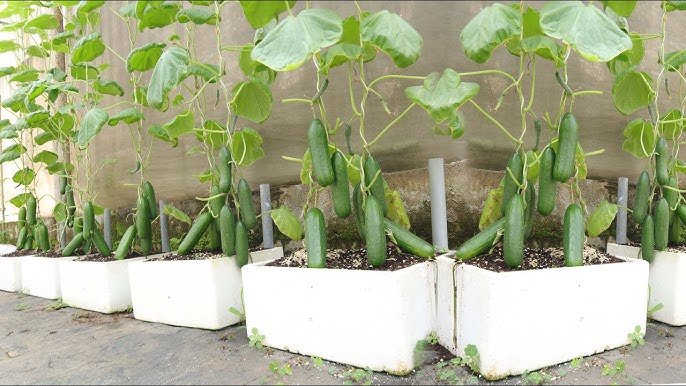
1. Compact and Lightweight
Unlike traditional garden beds, plastic cans can fit into small spaces and are easy to move around to catch the sunlight.
2. Excellent Drainage
With proper preparation, cans provide perfect drainage, preventing waterlogging and root rot.
3. Cost-Effective
Old plastic cans can be repurposed, saving money on pots or planters.
4. Perfect for Vertical Gardening
Cans can be stacked, hung, or placed in rows, maximizing even the tiniest spaces.
5. Control Over Soil and Nutrients
Growing cucumbers in cans allows precise control of soil type, moisture, and fertilizer.
Step 1: Selecting the Right Plastic Cans
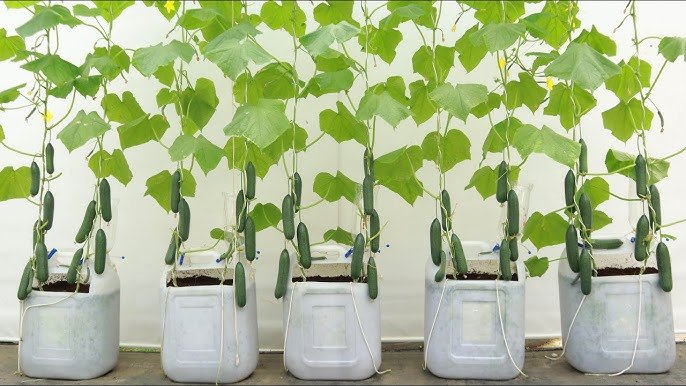
Not all plastic cans are ideal for cucumbers. Here’s what to look for:
- Size: Minimum 15–20 liters (for healthy root growth)
- Shape: Tall cans are ideal for deep-rooted cucumber plants
- Material: Food-grade plastic is best, but any sturdy, clean plastic works
- Condition: Avoid cracked or weak cans unless reinforced
Tip:
If using cans without drainage holes, drill 5–10 holes at the bottom to prevent waterlogging.
Step 2: Prepare Your Plastic Cans
- Wash the cans thoroughly to remove residues.
- Drill holes for drainage and, if desired, small side holes for air circulation.
- Add a thin layer of gravel or small stones at the bottom to prevent soil from blocking drainage.
- Place cans where they will receive 6–8 hours of sunlight daily.
Step 3: Prepare the Ideal Soil Mix
Cucumbers are heavy feeders and need fertile, well-draining soil.
Best Soil Mix for Plastic Can Cucumbers
- 40% garden soil
- 30% compost or vermicompost
- 20% cocopeat or coco coir
- 10% perlite or sand
Optional Additions
- 1 handful neem cake for pest prevention
- 1 cup wood ash or potash for strong fruits
- A pinch of bone meal for root development
Mix thoroughly before filling the cans.
Step 4: Choosing the Right Cucumber Variety
For container gardening, choose varieties that are compact and productive.
Best Varieties for Cans
- Bush cucumbers
- Mini cucumbers
- Japanese cucumbers
- Persian cucumbers
- Determinate or dwarf varieties
Compact varieties are perfect for small containers and will produce fruits faster.
Step 5: Planting Cucumbers in Cans
From Seeds
- Fill cans with prepared soil, leaving 2 inches at the top.
- Make small holes (1 inch deep) for seeds.
- Place 2–3 seeds per hole and cover lightly with soil.
- Water gently.
From Seedlings
- Transplant seedlings with 4–6 true leaves into the cans.
- Water immediately.
- Keep seedlings in partial shade for 1–2 days before full sun exposure.
Spacing: 1–2 plants per 20-liter can works best.
Step 6: Provide Support for Climbing
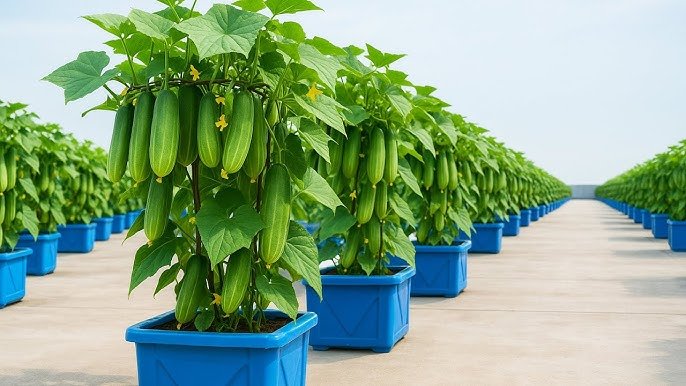
Cucumbers are climbers. Vertical growth helps conserve space, improves air circulation, and produces straighter fruits.
Support Options
- Bamboo or wooden stakes
- Nylon mesh trellis
- Balcony railing support
- Vertical PVC pipe frame
Gently tie vines to the support as they grow.
Step 7: Sunlight Requirements
Cucumbers thrive in full sunlight.
- Minimum 6 hours/day
- 7–8 hours is ideal for maximum fruit production
- Use a bright balcony, terrace, or sunny window ledge
- Partial shade is okay in extreme summer heat
Step 8: Watering Plastic Can Cucumbers
Consistent moisture is key for juicy cucumbers.
Watering Guidelines
- Keep soil evenly moist, but not waterlogged
- Water at the base, not the leaves
- Summer: Water daily
- Cooler seasons: Water every 2–3 days
- Mulch with dry leaves or cocopeat to retain moisture
Tip:
Inconsistent watering can make cucumbers bitter—avoid letting soil dry completely.
Step 9: Fertilizing for Continuous Harvest

Cucumbers are nutrient-hungry. Regular feeding ensures continuous flowering and fruiting.
Fertilizer Schedule
- Every 15 days: Add compost
- Every 10 days: Apply liquid fertilizer (compost tea, seaweed, cow dung liquid)
- Every 20 days: Add potash (banana peel fertilizer or wood ash)
Balanced feeding promotes healthy leaves and abundant cucumbers.
Step 10: Pollination Tips
Cucumber flowers are male and female. On balconies, fewer pollinators can reduce fruit set.
Simple Pollination Techniques
- Shake plants gently daily
- Hand pollinate with a small brush or cotton bud
- Plant flowers nearby to attract bees and insects
Proper pollination ensures maximum harvest.
Step 11: Harvesting Cucumbers
Cucumbers grow rapidly. Picking them at the right time encourages more fruit.
Harvesting Tips
- Check fruit size regularly
- Harvest every 2–3 days
- Pick firm, dark green cucumbers
- Avoid overripe fruits—they reduce plant productivity
Yield:
Each 20–25 liter can produce 15–25 cucumbers per season with proper care.
Common Problems and Fixes
- Yellow leaves: Overwatering or nutrient deficiency → Improve drainage, add compost
- Flowers drop: Poor pollination → Hand pollinate or improve airflow
- Bitter cucumbers: Irregular watering or heat stress → Keep soil evenly moist, provide partial shade if needed
- Powdery mildew: High humidity → Prune leaves, improve airflow, spray neem oil
Advantages of Plastic Can Cucumber Gardening
- Perfect for urban spaces
- Reuses old materials
- Continuous harvest with minimal effort
- Lightweight and easy to move
- Pest-resistant due to elevated growth
- Easy monitoring of soil and nutrients
With just a few cans, you can grow enough cucumbers to supply a small family regularly.
Final Thoughts: Your Balcony Can Feed You Fresh Cucumbers
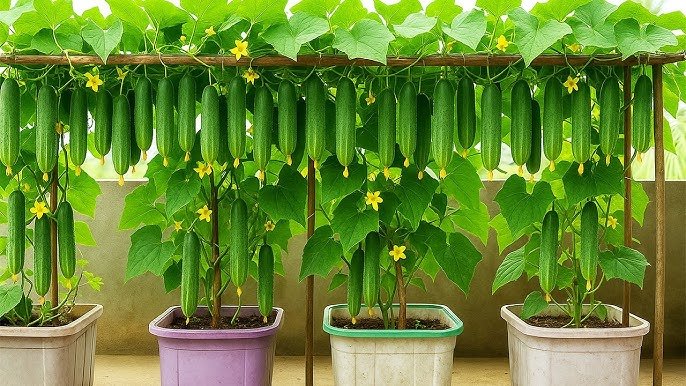
Plastic cans are not just trash—they’re a key to fresh, organic cucumbers without needing a traditional garden. With proper soil, sunlight, support, and care, your balcony can become a small cucumber farm producing crisp, tasty vegetables throughout the season.
Urban gardening has never been easier, cheaper, or more rewarding. Turn those plastic cans into mini cucumber farms, and enjoy the satisfaction of harvesting your own produce at home—even without a backyard.