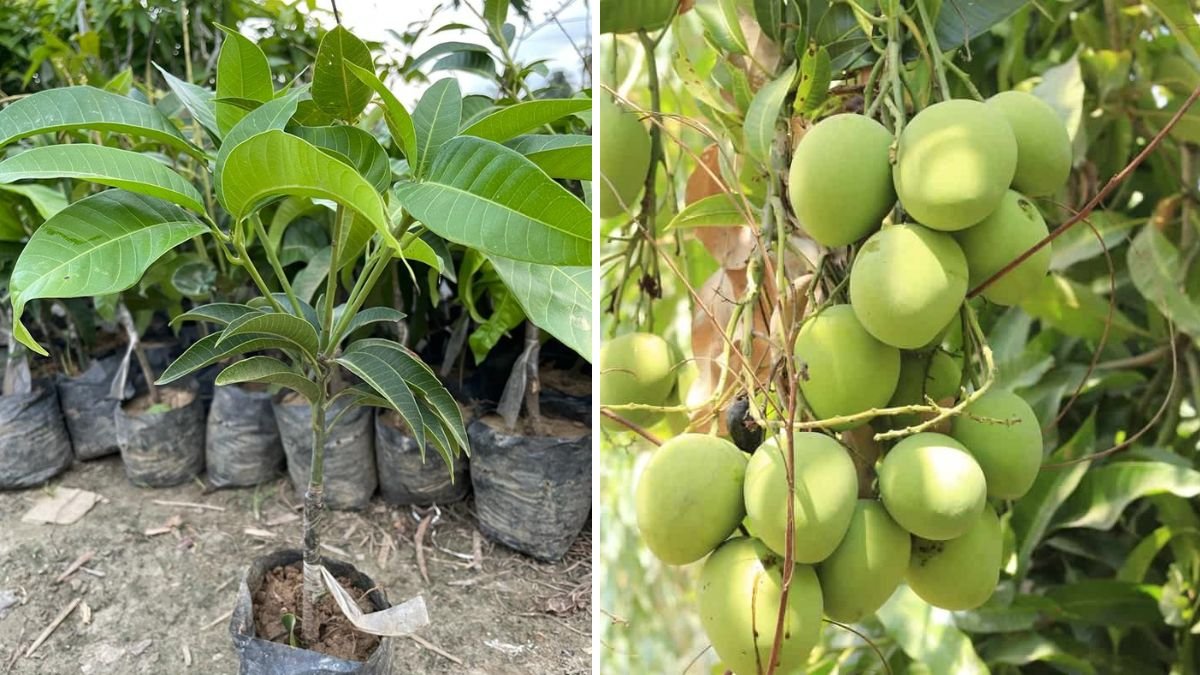

Grafting fruit trees is an ancient practice used to improve fruit quality, boost growth, and create stronger, disease-resistant plants. But in recent years, a fascinating viral idea has captured the attention of gardeners worldwide—the technique of grafting mango trees using bananas. While the banana is not used as a true grafting partner, it plays a powerful role in stimulating faster root development, sealing moisture, and boosting scion survival.
This surprising method has become popular among home gardeners because it combines traditional grafting with a simple natural booster: bananas! In this article, we explore how this method works, how to perform it successfully, and why it can significantly increase your mango grafting success rate.
🌱 Why Use Bananas in Mango Grafting?
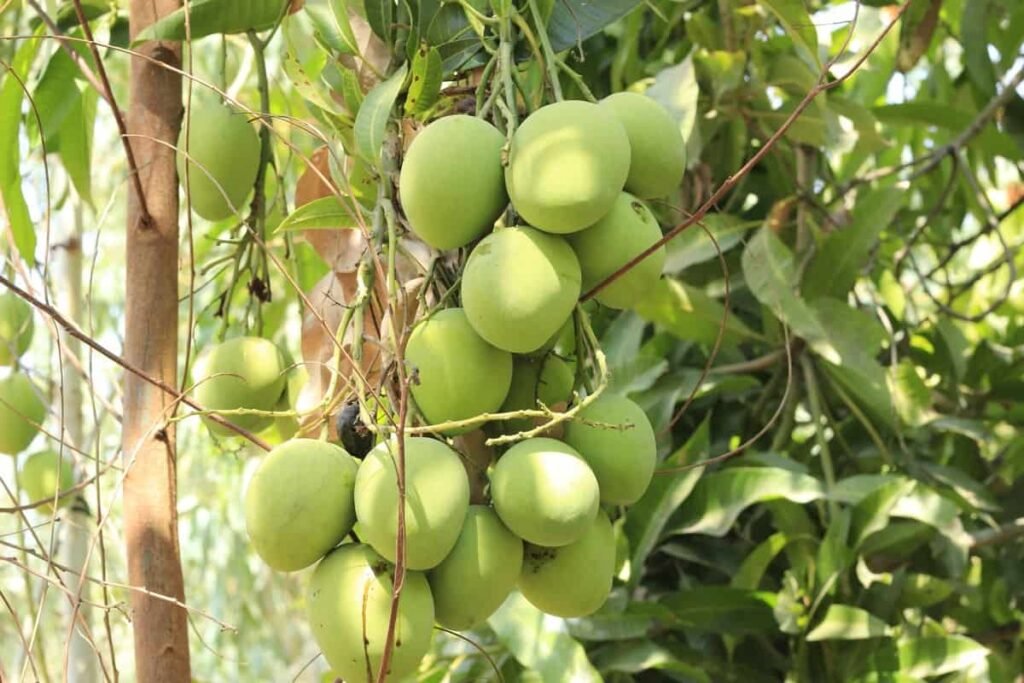
Bananas may seem unusual in grafting, but they actually offer several major benefits:
✔ Moisture retention
Banana pulp contains natural moisture that prevents the scion from drying out.
✔ Natural rooting hormones
Bananas contain small amounts of auxins and cytokinins, plant hormones that encourage healing and growth.
✔ Boosts callus formation
The banana’s soft texture helps the graft area stay humid, encouraging faster union.
✔ Lower graft failure rate
Many gardeners report higher success due to the scion staying fresh and hydrated.
✔ 100% organic method
No synthetic rooting gel or chemicals—just natural, safe, organic materials.
Let’s break down the full process step-by-step.
🍃 Step 1: Select the Right Mango Rootstock
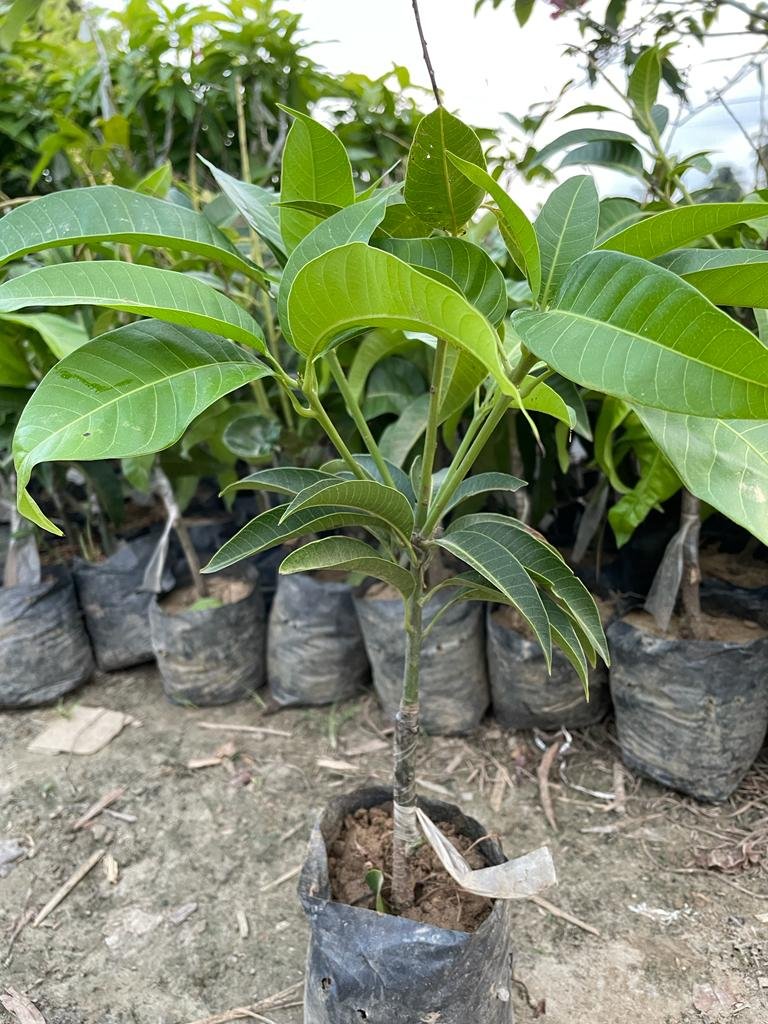
A healthy, young mango rootstock is essential.
The best rootstock should be:
- 8–12 months old
- 1–2 feet in height
- Stem thickness similar to a pencil
- Free from disease or pest damage
- Growing in well-drained soil
The younger and healthier the rootstock, the faster the graft unites.
🌿 Step 2: Preparing the Mango Scion (Branch for Grafting)
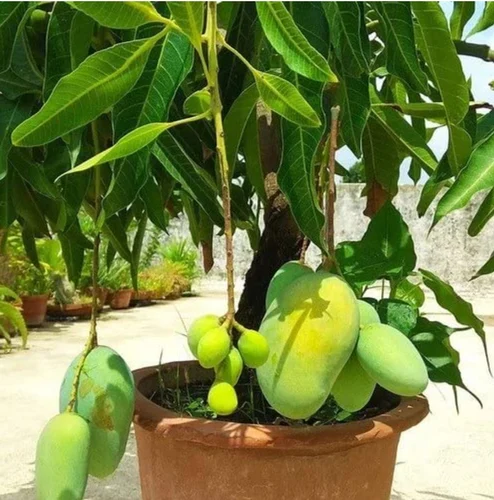
Choose a scion from a mature, fruit-bearing mango tree.
Ideal scion characteristics:
- Semi-hardwood (neither too soft nor too woody)
- 4–6 inches long
- 2–3 healthy buds present
- Taken from a branch that produced fruit previously
- Disease-free
Remove all leaves, leaving only the small leaf petiole base. This prevents water loss.
🍌 Step 3: How Bananas Are Used in the Grafting Process
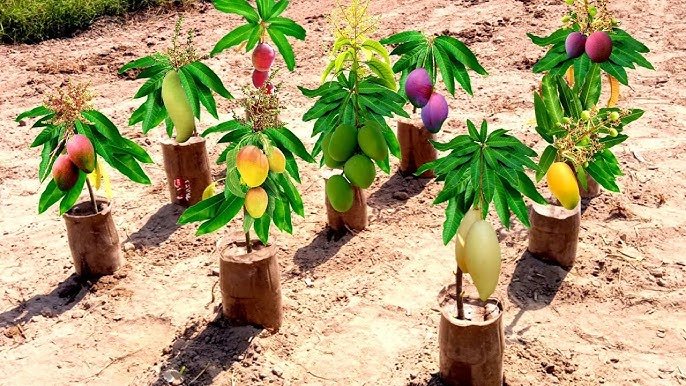
Here is the secret behind this technique:
The banana is NOT grafted onto the tree.
Instead, the banana acts as a natural healing and moisture-retaining medium around the graft.
You will use a slice of banana or banana peel to:
- Keep the scion moist
- Provide natural hormones
- Protect the graft union
- Encourage faster callus formation
This is why the method works so wonderfully.
✂ Step 4: Make the Cleft Cut on the Rootstock
- Cut off the top of the rootstock at about 6–8 inches above soil level.
- Make a 1-inch vertical slit in the center (cleft method).
- Be sure the cut is clean and done with a sterilized blade.
🌿 Step 5: Prepare the Scion
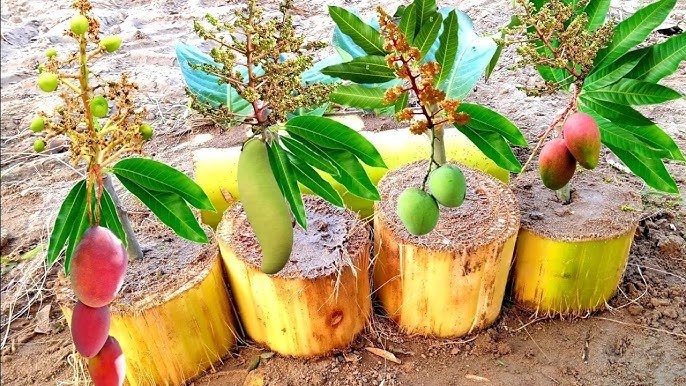
Cut the bottom of the mango scion into a sharp wedge shape. This wedge should fit perfectly into the cleft on the rootstock.
The wedge allows maximum contact between cambium layers.
🍌 Step 6: Insert the Banana (Magic Step)
Here’s how the banana is used:
Method A: Banana Slice Wrap (Most popular)
- Take a fresh thin slice of banana.
- Wrap it gently around the bottom of the scion.
- Ensure the banana covers the grafting area without being too thick.
- Insert the scion (with banana wrap) into the rootstock slit.
Method B: Banana Peel Moisture Seal
- Place a strip of banana peel around the graft union after inserting the scion.
- Peel must face the moist side inward.
Why it works:
Banana pulp retains moisture and prevents the scion from drying out—the biggest reason grafting fails.
🪢 Step 7: Tight Binding and Sealing
After inserting the scion:
- Wrap tightly using grafting tape, polyfilm, or parafilm.
- Ensure the banana and scion are sealed properly.
- No air gaps—air causes drying.
- Cover the top of the scion lightly to prevent moisture loss.
This sealed environment allows for faster union.
☀ Step 8: Post-Graft Care
Place the grafted plant in:
- Bright but indirect sunlight
- A warm area (25–35°C)
- Away from strong winds
- Slightly humid location
Watering
Water the soil—not the graft joint.
Keep soil moist but not soggy.
🌱 Growth Timeline
After 10–15 Days
- Scion remains green
- Banana around the graft begins to dry naturally
- First signs of callus formation
After 20–30 Days
- Tiny new buds begin to swell
- The scion becomes tighter and stronger
After 45 Days
- New leaves develop
- Remove the tape if it hasn’t degraded
After 60–75 Days
- Strong new shoot growth
- Plant can be shifted to full sunlight gradually
🍈 Benefits of Banana-Assisted Mango Grafting
✔ Higher success rate
Moisture retention is the greatest benefit.
✔ Faster graft union
Banana enzymes assist in cell bonding.
✔ Natural fertilizer
As the banana dries, nutrients seep into the soil.
✔ Beginner-friendly
Even first-time grafters find success with this method.
✔ Cost-effective
No need for expensive chemical grafting hormones.
🐛 Common Problems and Solutions
1. Scion Turns Brown
Cause: Drying out
Solution: Use a fresher banana slice and wrap tighter.
2. Fungus at Graft Area
Cause: Too much moisture
Solution: Use a thinner banana slice; improve airflow.
3. No Buds After 30 Days
Cause: Weak scion or poor alignment
Solution: Ensure cambium layers touch on at least one side.
4. Rootstock Sprouting Instead of Scion
Solution: Remove rootstock shoots immediately.
🌳 When Will the Grafted Mango Tree Bear Fruit?
Mango trees grown from grafts fruit much earlier than those grown from seeds.
Fruit Timeframe:
- 2–3 years: First flowering
- 3–4 years: First good harvest
- 4–6 years: Heavy fruit production
This is much faster than seed-grown trees, which take 7–10 years.
🌟 Final Thoughts
Grafting mango trees with the help of bananas is a clever, natural, and surprisingly effective technique. While the banana is not the graft partner, it plays a powerful role in helping the scion heal, stay hydrated, and unite with the rootstock more quickly.
This method is perfect for beginners, home gardeners, and anyone who wants to enjoy faster-growing mango trees with higher success rates.
Try this simple and innovative method—and you might just grow your most successful mango graft yet! 🌱🥭